
With the NHS under intense pressure and no let-up in sight for worn-out staff, the role of volunteers in bolstering services cannot be understated. At Helpforce, our data shows that 86% of medics say the quality of care they can provide is improved when they have volunteer support.
Once thought of as a ‘nice to have’, forward-thinking health leaders increasingly see volunteering programmes as a strategic imperative. Yet when we conjure-up images of hospital volunteers in our minds, how many of us think of people nearing or beyond retirement age, proudly wearing their volunteering vests and rolling up their sleeves to ‘help out’.
While it’s true that many of the nearly 100,000 people who volunteer for the NHS across the UK are over 55 – bringing invaluable life-experience, knowledge and commitment to their roles – there’s a danger in stereotyping. It carries an assumption that baby boomers have the greatest appetite for ‘stepping forward’ and, thus, recruitment tends to be tailored to this demographic.
A recent YouGov poll for Helpforce revealed a surprising truth: Those most likely to consider healthcare volunteering are aged 18-24. Yes, it turns out that those Gen Zers, who are all too often mislabelled as a lazy or ‘screen-obsessed’, are in fact more inclined to gift their time and talents to the NHS than any other age group.
While across society, almost a quarter (24%) of respondents expressed enthusiasm for NHS volunteering, the figure rose to a third (33%) among young adults. This compares to 20% of those aged 55 and over.
So, what does this tell us, and why does it matter for NHS leaders and those in charge of NHS trusts and integrated care boards?
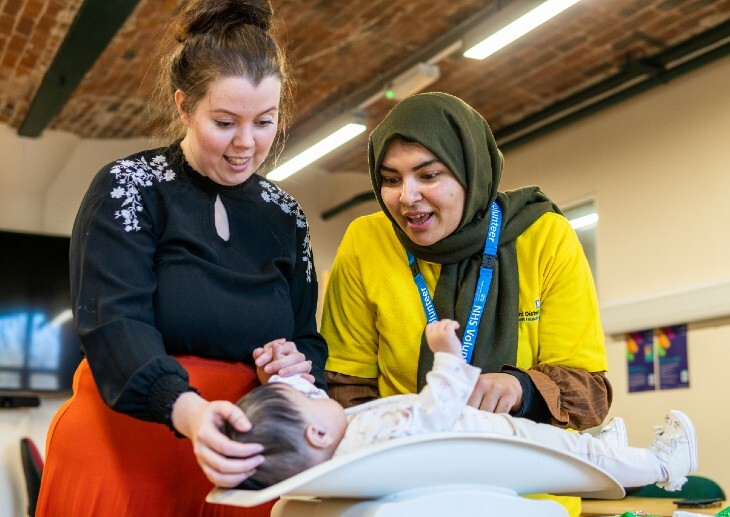
With a treatment backlog standing at 7.3m cases and with over 102,000 vacant NHS roles placing medics under intense pressure, super-charging the number of volunteers who take on specific ‘response’ tasks – designed to improve the flow of patients through hospitals – could be transformative. Examples include collecting prescribed medication from hospital pharmacies for patients to take home, transporting blood samples from bedsides to on-site labs, and providing mealtime assistance – all tasks that alleviate pressure on doctors, nurses, and healthcare assistants, enabling medics to focus on delivering high quality clinical care.
The potential prize is huge. Helpforce works with over 100 NHS organisations to design and evaluate high-impact volunteering solutions and our extensive evidence suggests that for every 10,000 new ‘response volunteers’ recruited, 1.1 million hours of annual efficiency gains can be achieved by the NHS.
Gen Z is ready to step up. It’s time for healthcare leaders to open the door and let them in.
Yet, barriers remain. Many potential young adult volunteers don’t know what roles are available or how to apply. The biggest obstacle is time. But with flexible, impact-led programmes, and clear pathways to involvement, we can overcome these challenges.
If just five percent of interested Gen Zers could be persuaded to sign-up, we would nearly double the entire current UK NHS volunteer force, adding around 95,000 eager helpers to wards, clinics and corridors.
And when it comes to the NHS 10-Year Health Plan’s shift from ‘hospital to community’, there’s more good news – especially in the context of new Neighbourhood Health Centres being rolled out by the DHSC and NHS England. The YouGov survey asked those respondents who expressed enthusiasm for volunteering where they would prefer to donate their time. Over a fifth (22%) said their local hospital, while 38% opted for a neighbourhood setting (remaining respondents were unsure or didn’t have a preference).
I must be clear that none of this is about replacing professionals. It’s about complementing their work, improving efficiency, and delivering better care. It’s about harnessing the goodwill of the public – especially the young – to tackle seemingly intractable NHS problems together.
We must also consider the NHS workforce of the future. With tightening immigration rules and constraints on recruitment budgets, where are tomorrow’s NHS heroes going to come from? Exposing 18 to 24-year-olds to healthcare settings through volunteering is likely to interest them in a career in health – which could be hugely worthwhile for them, while boosting the NHS with young, committed talent.
There’s a societal win here too, with the number of young people currently not in employment, education or training edging 950,000.
What can healthcare leaders do?
- Champion volunteering as a strategic priority in your organisation
- Partner with expert charities like Helpforce to co-create tailored solution-driven programmes
- Make it easy for young adults to find roles and apply
- Celebrate the impact of young volunteers, sharing stories and data to inspire others.
- Advocate for government support and investment in volunteering infrastructure.
By embracing this opportunity, we can unleash potential, unlock lasting change, and build a future where volunteering is integral to healthcare being its very best.