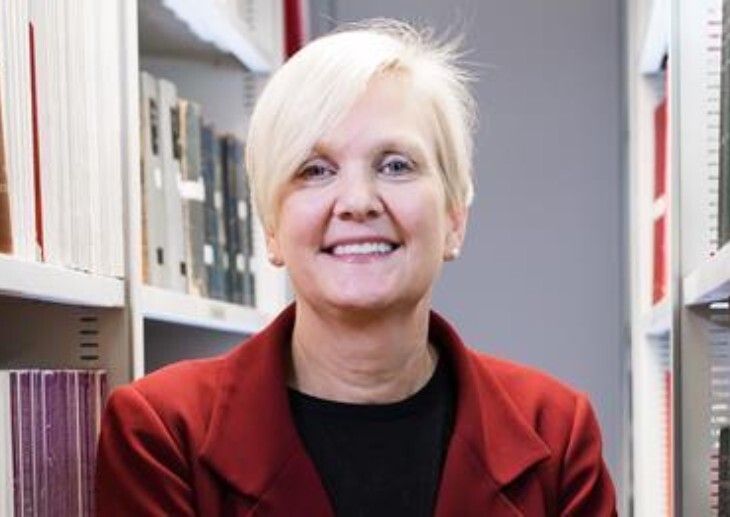
As the NHS undergoes a wave of restructuring, the future for many staff feels uncertain. Add to this the resignation of health secretary Wes Streeting and the government’s 10-Year Plan ambitions feel even further away. Reporter Fiona McDonald spoke to Professor Nora Colton, founder and director of University College London’s (UCL) Global Business School for Health about the current challenges facing NHS leaders
‘People are tired,’ Professor Nora Colton says, and health leaders are suffering from ‘change fatigue’.
Professor Colton says recent changes to integrated care boards (ICB) have been ‘jerking them around’ and goal posts have been moved. She underlines the need to get things structured so that there is ‘a degree of confidence’ they can ‘actually be delivered’ before further restructuring.
April saw the reduction of ICBs, from 42 to 36, following a government announcement last year that boards had to cut their running costs by 50%, equating to a loss of about 12,500 staff across health systems.
The former deputy vice chancellor at the University of East London, says the cuts mean ‘there’s also a lot of institutional knowledge that’s being lost’, a concern shared by policy expert Nigel Edwards who spoke to Healthcare Leader in March.
‘People are being exited out…which you could justify from a change management perspective. But again, are we really upskilling the ones that we’re keeping, and how are we doing that?’
The changes have not been designed with staff, leaving them feeling ‘done to and not with’, says Professor Colton, adding that another challenge is how people are going to put the changes into action.
She elaborates: ‘It’s the idea that the project is never done, right? What is good going to look like? When are we going to know when we’re going to stop and then how many years [later] are we going to wait before we review it again?’
But Professor Colton also says that changes to ICBs are ‘conceptually exactly where we need to go’ in terms of bringing all the pieces of the system together and reducing ‘duplication’.
The health management expert adds that it is integral to ‘link up and work more systemically, and that would cut down on duplication’ – an aim of the headline merger of NHS England and the Department of Health and Social Care. She adds that this would also help with prioritising, but that point is never reached ‘because we’re constantly in this churn of turmoil’.
‘Too much focus on clinical needs’
Professor Colton, who founded the health-focused business school in 2021, says the NHS has seen ‘too much focus on clinical needs and the need for clinicians, and not enough realising that all of these problems are management and leadership problems.’
‘And what we really need to be focusing on is the workforce planning, digital adaption, finance, operations and systems thinking, which, again, we hear a lot of chat in the NHS about systems thinking. But how do you really operationalise that?’
When asked what the key factors are driving the productivity crisis in the NHS, she says this is due to a capacity issue in terms of leadership and management.
The professor of leadership and management for healthcare adds that improving productivity cannot be done without building capacity to drive it forward.
‘If you just set targets, if you just say you’ve got to improve your productivity 2% without actually building the capacity to drive that forward, then you’re going to continue to have this productivity gap,’ she says.
Flagship government plan ‘not deliverable’ right now
When it comes to the ambitions of the NHS in the government’s 10-Year Health Plan, published last July, Professor Colton says it is ‘aspirational’ and ‘currently not deliverable’ unless there is change.
The plan details three key shifts across the health service: moving care out of hospitals into the community, shifting from treating sickness to prevention and changing from analogue to digital.
‘Is it deliverable? Yep, but probably not in 10 years. Not unless we stop doing things like we’re doing them now, which is jerking the NHS around and being unrealistic about the capacities.’
If we stop looking for ‘quick fixes’, however, she says, it could be delivered.
‘There needs to be a lot more investment in people…management and leadership,’ she adds.
‘We need to move away from the blaming and more on the supporting…and get an appropriate time horizon.’
She elaborates: ‘We need to focus much more on capacity building for delivering that strategy and put the investment there and stop looking for quick fixes and engaging in displaced activity. If we do that, then, yes, I think it’s deliverable.’
Technology trust issues preventing change
And the shift from analogue to digital is not ‘achievable in our current state’, according to Professor Colton.
‘No one’s going to disagree with the10-Year Plan. But it’s almost too aspirational, and there’s not enough “how”?’
The academic, who has been a visiting professor at universities across the world including in China and Lebanon, also said that trust issues around the use of technology are holding up progress.
‘There’s a lot of trust issues around technology and the use of technology, and so I think we are making marginal gains,’ she said.
‘It’s better than it was, but we could do a lot better and spend our resources more effectively if we just took a step back and focused on how we were going to do it, rather than why we’re going to do it.’
AI will ‘speed up broken system’
Professor Colton also comments on artificial intelligence (AI) just speeding up a ‘broken system’ and expresses that the NHS needs leaders and managers who can think about the operational impact of their decisions.
‘If you put AI in, all you do is speed up a broken system,’ she said, explaining that some of the administrative solutions AI is currently able to address look like ‘low hanging fruit’ but are ‘not really solving any problem. They’re just speeding things up’.
She highlights that frontline health workers are not seeing the benefits of the ‘technology’, which is a key aim of the 10-Year Health Plan.
‘If you talk to frontline workers, they’re burnt out, they’re working harder. They don’t see the technology making things better.
‘That’s because we need leaders and managers who can think about the operational impact of the decisions that they’re making. We need to better work with the [technology] vendors to understand the implications.’