The first pillar of the HIV Action Plan 2025 to 2030 looks to prevent HIV transmission through awareness-raising campaigns and increased access to prevention methods
Prevention programmes form a central part of the goal to reduce HIV transmission in England. However, the HIV Action Plan acknowledges progress has been ‘uneven’ on this front, driven by low awareness and structural factors that have limited access to preventative measures such as PrEP.
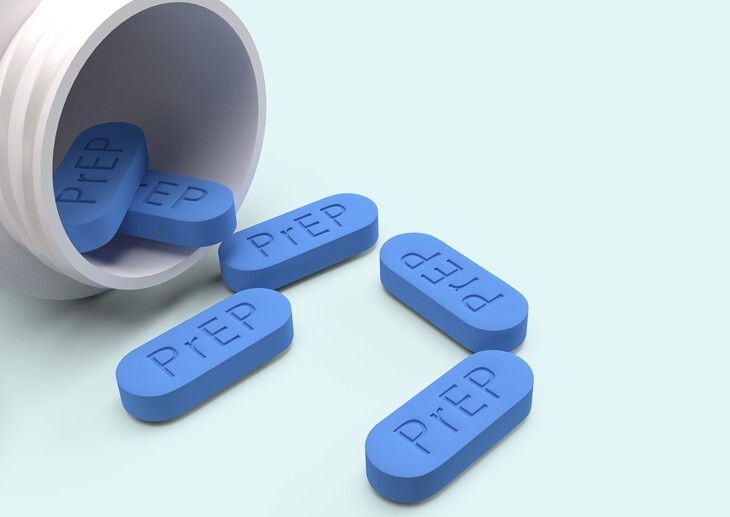
Particular issues are faced by young people, ethnic minority communities, heterosexual men and women, transgender and non-binary individuals, plus people who inject drugs, according to the BASHH/BHIVA guidelines on use of PrEP. The HIV Action Plan monitoring and evaluation framework 2026 further highlights those discrepancies. The report shows uptake of PrEP has grown every year since its NHS rollout in 2020, to reach a record 111,123 people 2024. Uptake is approaching 80% among gay and bisexual men with a need identified. Yet among Black African heterosexuals, that figure stands at less than 40%.
‘To close this gap, it is vital that actions are taken to engage with these communities and reduce missed prevention opportunities,’ the HIV Action Plan states. It suggests potential commercial partnerships to support HIV prevention, including uptake and access of PrEP.
The plan also points to emerging PrEP technologies as having ‘an important role to play’. For example, in October, a new long-acting injection – cabotegravir – was approved by the National Institute for Health and Care Excellence (NICE) for use in people at risk of HIV who cannot have PrEP tablets.
ICBs have a key role to play in this first pillar of the HIV Action Plan, says Mike Bell, chair of West and North London ICB.
‘With regards to the prevention agenda, as ICBs we must work closely with our local authority colleagues, who have a key role in prevention of HIV alongside their role in funding wider sexual health services,’ he says.
Key takeaways for ICB
- A £4.8m campaign will raise awareness of HIV prevention across England
- Community settings have been identified as a key location for PrEP access
- Digital access to PrEP is an emerging priority
Awareness-raising campaign
A new national HIV Prevention England campaign is designed to raise awareness of HIV prevention among at-risk and underserved populations. The programme will be led by the Department of Health and Social Care and backed by £4.8m in funding from April 2026 to March 2029.
Prevention methods such as PrEP will be a focus of the campaign, alongside safer sex and testing (see chapter 2).
The new initiative will build on the five years of work already delivered by HIV Prevention England, in conjunction with the Terrence Higgins Trust. From 2021 to 2026, it worked to boost HIV prevention work through four key components: campaigns, community interventions, capacity and skills development, and stakeholder engagement.
In 2025, its ‘PrEP protects’ campaign targeted Black African heterosexuals and women, who were identified as less likely to use prevention methods such as PrEP.
It is not yet known exactly what form the new activity will take. However, the UKHSA’s HIV prevention barriers and facilitators study called for scaled up national or local awareness-raising initiatives on HIV prevention interventions using established social media platforms – with a particular focus on engaging younger populations.
Alongside the campaign, young people will also be targeted through the mention of PrEP in updated statutory relationships, sex and health education (RSHE) guidance.
Community PrEP provision
Sexual health clinics are the main providers of PrEP. However, the HIV Action Plan is keen to expand provision to a wider range of settings.
It pledged to work with local government on ‘wider implementation of new PrEP approaches and technologies’ – including ‘building and promoting the evidence around alternative delivery settings’.
The aim is to make prevention methods as accessible as possible. Due to their high street location, community pharmacies were identified as a key opportunity by the Terrence Higgins Trust in January. Provision of PrEP in pharmacies would widen access, reduce health inequalities and ease pressure on overstretched sexual health clinics, found its report, ‘PrEP in Community Pharmacy: Policy options for widening PrEP access in England’.
‘We would be really keen to see PrEP accessible in other settings,’ says Katie Clark, head of policy at the Terrence Higgins Trust. ‘The argument for PrEP access in pharmacies is that people might go there for the morning-after pill or for condoms. People trust pharmacies and they are there on the high street.’
Ms Clark believes it would also be beneficial for GPs to provide PReP ‘as people interact with the health service in their sexual and reproductive health’.
To encourage that wider access, the Elton John AIDS Foundation has invested £1m in two pilots across England, in partnership with Fast Track Cities, Gilead Sciences and ViiV Healthcare. One of those pilots – in Brighton and Hove, West Sussex and Liverpool – is assessing the benefits of embedding PrEP into ‘everyday healthcare settings’, such as women’s health hubs, antenatal appointments, cervical screenings and primary care.
The aim is to reach ‘Black African women, sex workers, and refugee and migrant communities who are less likely to attend a sexual health clinic,’ says Anne Aslett, CEO of the Elton John AIDS Foundation. ‘The principle is the same as it’s always been: to drive down HIV infections, you must meet people where they are, in settings they already trust.’
Digital PrEP provision
Digital access to PrEP was named as another priority in the HIV Action Plan. It calls on NHS Shared Business Services to promote the newly procured Online Sexual Health Services Framework to sexual health services and other relevant providers, offering ‘a convenient route for provision of online PrEP and PEP’.
The plan also pledges to build and promote the evidence for remote PrEP prescribing.
The Elton John AIDS Foundation is helping to build that evidence through its second pilot, Expanding PrEP Access through novel delivery in North East London. The initiative allows participants to complete online assessments for the delivery of PrEP to their homes or local dropbox.
In nine months, 2,988 prescriptions have been dispensed – a 17% increase in uptake compared with the previous year. According to figures from the Elton John AIDS Foundation, 24% of users accessed PrEP for the first time, and 31% came from non-white ethnic backgrounds.
‘Digital tools remove barriers that have been stopping people from getting care for years,’ says Ms Aslett. ‘For someone who fears being seen walking into a clinic, who can’t get time off work, or who lives hours from the nearest sexual health service, remote access changes the equation entirely.’
This report has been initiated and funded by MSD. MSD has had no input into the content of this non-promotional report.
Click here to download and read the full report.