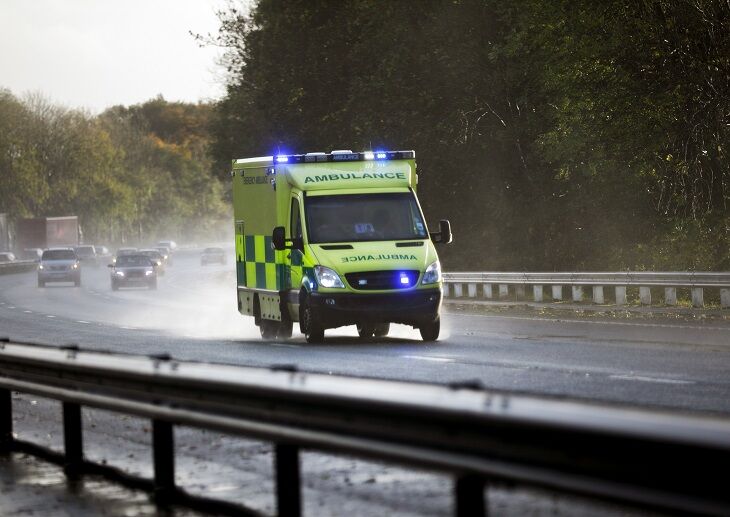
Plans by an ICB to use artificial intelligence to prioritise ambulance callouts have raised concerns among local GP leaders.
Sussex ICB has set out plans to overhaul urgent care, including ambulance services using artificial intelligence and advanced analytics ‘to only send a crew when required’.
It said that it is planning to move towards a model of ‘digital first access’ to urgent and emergency care.
But local GP leaders have expressed concerns about using AI to prioritise ambulance callouts, arguing it could ‘undermine confidence’ in the health service.
In a plan presented to the board, Sussex ICB said that as part of this the NHS app would ‘support patients to find the most appropriate service based on their need’ and that ambulance services would ‘use AI and advanced analytics to only send a crew when required based on patient need and use’.
But the local LMC said that turning to AI solutions when the problem is a lack of resources is ‘a false dawn’.
One of the ‘key’ aspects of the plan is for staff to ‘utilise voice technology to direct patients to the most appropriate setting’ and ‘AI to manage appropriate navigation and resolution’ of issues.
The plan said: ‘Enhancing the digital first function in Sussex will allow care to be delivered in the most appropriate setting and reduce ED attendances.’
It also said that shared patient record and information will be ‘critical’ to delivering the models described in the plan but that the ICB will be ‘clear who is responsible for data and how AI is used’.
There will also be an ‘agreement on when and where AI should be used’ and a ‘common data dictionary and standards’ to make AI ‘more effective’, the plan added.
Surrey and Sussex LMCs chief executive Dr Julius Parker said that AI solutions will only work within properly funded services.
He said: ‘Although the use of AI and advanced analytics may have a role in assessing an individual’s need for care, it is important this does not replace, nor is seen as a substitute, for humanity in its broadest sense.
‘A “computer says no” approach to one of our most fundamental needs, care when we are unwell, and at our most vulnerable, would be the unacceptable face of the NHS. It will undermine confidence in the healthcare system.
‘Turning to AI solutions when the problem is a lack of resources, both of workforce and infrastructure, as is identified within the surveys undertaken, is a false dawn. AI solutions will work best within a properly funded, caring services that are available when needed.
‘Displacing care from one under resourced service to another will do nothing for patients and those who provide their care.’
The ICB said that community feedback from over 20 engagement events between July 2019 to 2024 ‘highlighted some common patient concerns’ with accessing urgent care – including same-day GP appointments being ‘unavailable’ and vulnerable patients struggling to access GP care.
However, the plan set out that ‘virtual and in person urgent care and advice’ will continue to be delivered through community services, including same day primary care.
It said that the new model will reduce the ‘avoidable attendances at ED’ by delivering ‘a quick and trusted service’ through ‘a virtual mechanism’ that directs patients to services in a community setting where necessary or provide advice and guidance.
South East Coast Ambulance Service (SECAmb) said the AI approach detailed in the ICB plan is currently not in place.
A spokesperson said: ‘We are in the very early stages of exploring how the use of AI could improve our overall response to patients.’
Last November, the World Health Organisation (WHO) warned that the rapid rise of AI in healthcare is happening without the basic legal safety nets needed to protect patients and health workers.
It comes after the Government said it supported the rollout of AI tools in GP practices over the next two years, in a bid to save clinicians’ time.
This story first appeared on our sister title Pulse.