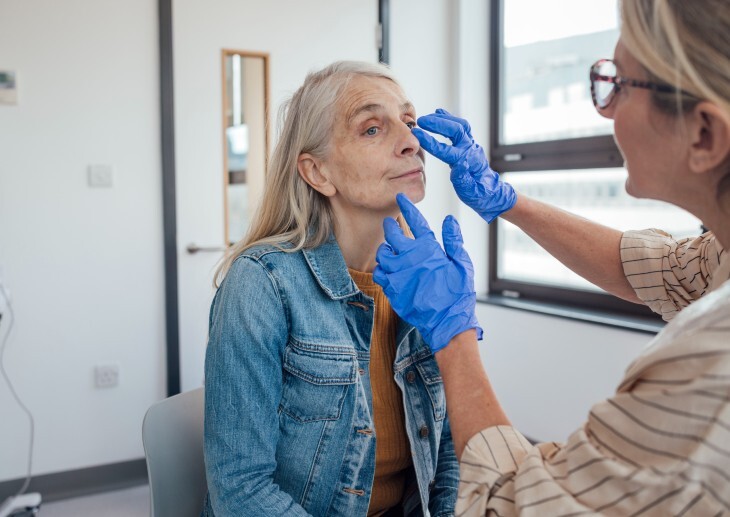
Patients with routine dermatological conditions are now receiving faster specialist treatment in community settings via the Primary Care Dermatology service operating across Coventry and Warwickshire.
The service, commissioned by Coventry and Warwickshire Integrated Care Board (ICB), is a positive example of the NHS 10 Year Health Plan’s aim to shift care from hospital to community, capitalising on proactive collaboration across primary and secondary care.
The challenge
The ICB wanted to reduce hospital waiting times for routine dermatological conditions and make it easier for patients to access treatment closer to home. With one privately led service already set up, the ICB was keen to offer patients a choice of provider and additional clinic locations.
Coventry & Warwickshire Integrated Primary Care (IPC) is a not-for-profit organisation made up of four GP-led at scale primary care providers. We had already established a successful system-wide Primary Care Gynaecology Service and were keen to develop a community-based dermatology service that would see additional specialist services being offered within primary care. However, this service needed to include consultant-level oversight to support triage and treatment, and ensure urgent conditions remained on a hospital pathway.
Our approach
IPC began setting up a service under the Any Qualified Provider model that would enable GPs with specialist qualifications and experience in dermatology to deliver face-to-face clinics in multiple locations. Working in partnership with Consultant Connect, we developed a consultant-led model which maintains consultant oversight at all stages of the patient’s journey, from triage to treatment. The specification encompassed several conditions and treatments, including minor operations and cryotherapy which required specific facilities and expertise.
Drawing on experience from our other system-wide services, we rapidly established operational requirements, including confirming and recruiting to clinical and admin roles, interviewing for a Clinical Lead, formalising sites, and establishing the triage and oversight process with Consultant Connect.
Identifying clinics: Our aim has been to deliver this service ‘for the patient and near the patient’, making local appointments a key priority. Operating across a diverse footprint meant finding the right balance between providing accessible clinics and ensuring a sustainable service. We engaged with GP practices across the system to identify potential sites and assess them against criteria such as public transport access, parking, weekday and weekend availability, and staffing. Identifying multiple sites enables us to offer greater flexibility for patients to attend whichever local clinic is most convenient.
Recruiting GPs with Extended Roles: We modelled the likely demand based on patient population data to confirm the number of specialist GP hours and range of expertise and experience required. Recruitment was based on creating enough capacity to provide clinics six days a week cumulatively across all sites. We established a flexible sessional model enabling GPs with special interest and experience in dermatology to take on hours or sessions that fit around existing commitments. All GPs were interviewed and assessed for qualifications and experience in dermatology and are required to continue their dermoscopy training and development on an ongoing basis.
Seamless care: We worked closely with the LMC and Data Protection Officer to establish data sharing agreements that enable clinicians working in Primary Care Dermatology write-up consultations directly into patient notes, offering seamless care and keeping local GPs informed. Access to the service is via GP referral, with practices able to refer directly via eRS, attaching photos to aid triage.
We provided all GP practices with a comprehensive information pack and patient resources ahead of the launch of the service in April 2025 and ran a short webinar on launch day to explain the service and walk practices through the referral process.
Outcomes to date
- The service launched on time with 25 referrals received in the first three days and some patients referred, seen treated and discharged within ten days.
- We have since received over 2,400 referrals, of which 94% patients have been seen within six weeks of their initial referral. This is a significant improvement on hospital waiting times, which can be as long as 18 months in some cases.
- The service provides both general dermatology and non-urgent skin cancer assessment and treatments.
- Patient feedback is reported quarterly and is consistently positive. Of those that provided feedback during October to December 2025:
- 96% said their overall experience of PCD was either good or very good
- 97% rated PCD as ‘good’ or ‘very good’ at making them feel at ease, showing interest in their concerns, and explaining things clearly.
- 89% said the service was ‘good’ or ‘very good’ at helping them manage their health.
- 91% felt the service was either ‘good’ or ‘very good’ at making a plan of action with them
- Clinic sites have increased from nine originally to 12 now, enabling us to have more than one clinic in each area and offer more flexible appointments for patients on different days, including Saturdays.
- With the referral system enabling images to be attached, less than 1% of referrals are routed back to a hospital pathway at triage stage. Overall, only 4% of patients attending clinics have had to be referred elsewhere due to them needing specialist or more urgent treatment.
- The Clinical Lead and Dermatology Consultant are both actively involved in the service and provide additional support and training, including in-clinic guidance where necessary.
- Coventry & Warwickshire is able to offer a broader range of opportunities for GPs wishing to use and build on their specialist skills, which is helping to attract and retain GPs with special expertise within the system.
Anyone aged 16 or over and registered with a GP in Coventry & Warwickshire now has a choice of provider for routine dermatology conditions at a range of community-based clinics. Establishing Primary Care Dermatology has involved close working not only across primary care but with secondary care colleagues to ensure the service frees up capacity within local trusts to treat more specialist and urgent cases more quickly.
Dr Jacob Cain is Operational Clinical Director of IPC Primary Care Dermatology, Dr Suparna Behura, is the Clinical Operational Lead, and Susan Collins is the Service Delivery Manager.