As part of our focus on women’s health, Kathy Oxtoby looks at provision in Bedfordshire, Luton and Milton Keynes, now part of Central East ICB.
‘What comes across loud and clear, in the national Women’s Health Strategy and our local engagement work is that women feel that their voices are not heard,’ says Dr Sanhita Chakrabarti, women’s health champion for the former Bedfordshire, Luton and Milton Keynes (BLMK) ICB, whose residents are now served by the larger Central East ICB.
‘They feel they have not got enough agency, advocacy or empowerment to get the right support they need, and are often dismissed and not supported when they’re seeking help, which then results in poor care and poor outcomes,’ she says.
Another challenge, both nationally and locally is that there are long waits for gynaecology services, she says.
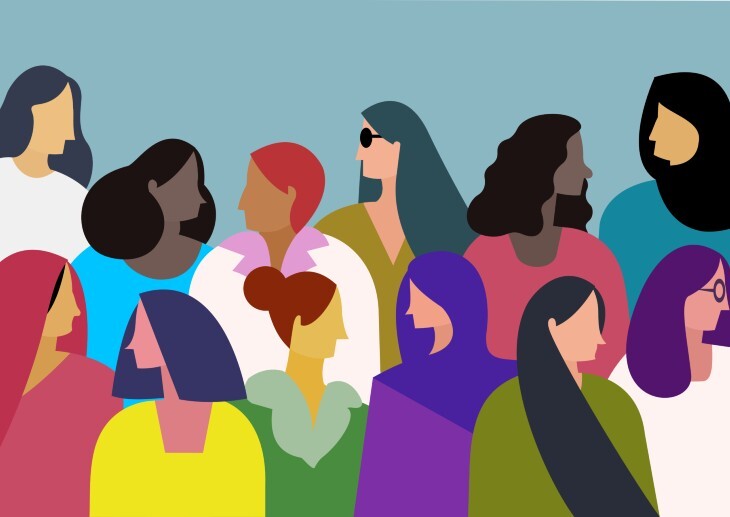
The voices of women who are vulnerable, from the global majority – a collective term for people of African, Asian, indigenous, Latin American, or mixed-heritage backgrounds, who constitute approximately 85% of the global population – those that are marginalised in the community, and seldom seen and heard, ‘are even more suppressed’, she says. ‘Access to provision for them is even further compromised, and there’s huge disparities in that provision.’
Now that ICBs are strategic commissioners, she says their role regarding women’s health is to ensure they have access to and get the right care at the right place at the right time.
Responding to these priorities for women, and the need for better provision for women who are vulnerable, during the past 18-24 months, Women’s Health Networks have been established in BLMK. Every primary care network (PCN) has skilled people trained up to support women’s health needs, such as menopause and menstrual health.
Having consulted with women in the community, BLMK concluded that rather than having Women’s Health Hubs with physical buildings, what was needed were networks of support, which would involve sustainable collaborations.
In BLMK there are specialist community Women’s Health Network leaders who have additional expertise to support women in the community.
As a result, ‘our local data is starting to show that about 15 to 20% of our women are now being looked after in the community without having to go to hospital’, says Dr Chakrabarti.
BLMK is also working with voluntary organisations in areas where there are large populations from global majority communities. These organisations are seeking out women with problems that have not been resolved, and bringing them into the Women’s Health Networks so they can get the right support.
The women’s health programme in BLMK can perhaps best be summarised as ‘Right Care for the Right Woman at the Right Time’.
‘This work has shown that with a collaborative approach, working across boundaries of public health, local authorities, hospitals, GP practices, and social prescribing link workers, and putting the needs of women at the centre of care, we are able to achieve better outcomes for them, and they get a better experience. We want to learn from this and continue to make sure that we are making the right provision going forward,’ says Dr Chakrabarti.
BLMK has also trained many community and primary care based clinical teams, so they can support women in a timely manner and so there is ‘no wrong door’, regarding their healthcare.
BLMK has collaborated with a mental health provider on an initiative where mental health practitioners, who come in contact with women for the first time who are in the menopausal age group, have had awareness training to recognise that their symptomatic presentation could be resulting from menopause.
BLMK also offers a digital app to help women with pelvic physiotherapy, with support from a physiotherapist, rather than them having to wait to see a gynaecologist.
The consequences of not supporting women’s health are concerning. Dr Chakrabarti says: ‘If we do not improve women’s access to care, and do not have more trained staff in the community to look at women’s needs in a holistic way, we risk a significant proportion – 51% of our population – not being well enough to function in our community.
‘Some 80% of household decisions are made by women. Women make up the significant proportion of paid and unpaid caring roles and a significant proportion of the workforce in this country. So, without listening to them, without improving access to care for women, and without getting trained staff to support them, we jeopardise all of those values that our society is built on.’
She says the ICB will be ‘looking at the renewed Women’s Health Strategy and making sure that we are actively taking notice of the recommendations and that we embed it into our strategic commissioning’. She highlights how, for example, the renewed Women’s Health Strategy looks at new reforms to tackle outdated and misogynistic practice around pain relief.
She is ‘excited and inspired’ by the renewed strategy. ‘It gives us a clear direction around some of the key deliverables we have to make happen for women, which women have campaigned or talked about.’
‘We need to be paying more attention to women’s health needs, because they make up a big proportion of paid and unpaid care support, and without their support family infrastructures will break down,’ she says.
ICBs ‘cannot ignore their responsibilities’ with supporting women’s health, she says. And women from the global majority ‘who are vulnerable, and are seldom heard and seen – we need to empower them and to give them the tools and support so that they come forward with their needs early. And we need to listen to them more.
‘And there will be people who do not identify as women, but who will still need women’s health provision and women’s health services, and we should be inclusive to their needs.’