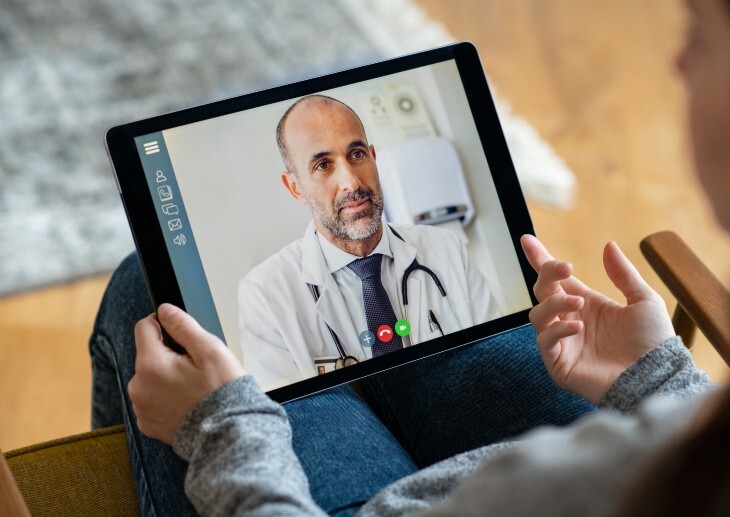
The NHS is to launch an ‘online hospital’, called NHS Online, with patients set to use the service from 2027, NHS England has announced.
Patients will have the option of being referred by their GP to the online hospital for their specialist care, rather than the typical hospital route.
They will then be able to book their appointment directly via the NHS App. If they need a scan, test or procedure, patients will also be able to book these in a local Community Diagnostic Centre.
NHS England added that initially the focus of the model will be on a small number of planned treatment areas with the longest waits, but will overtime be expanded to more treatment areas.
Sir Jim Mackey, NHS chief executive, said: ‘This is a huge step forward for the NHS and will deliver millions more appointments by the end of the decade, offering a real alternative for patients and more control over their own care.
‘Patients who choose to receive their treatment through the online hospital will benefit from us industrialising the latest technology and innovations, while the increased capacity will help to cut demand and slash waiting times.
‘The NHS can, must and will move forward to match other sectors in offering digital services that make services as personalised, convenient, and flexible as possible for both staff and patients.’
Rory Deighton, acute and community care director at the NHS Confederation said NHS leaders will ‘welcome’ the new service for elective care that will ‘go some way to meeting demand for those patients on waiting lists for elective surgery, by improving the speed at which they are seen by a clinician and can access diagnostic scans as well as surgery’.
‘However, the devil will be in the detail in terms of how this service is offered to patients through the primary care front door, as well as ensuring that this does not widen the gap for those who are digitally excluded,’ he added.
‘Addressing workforce capacity gaps both in primary and secondary care, as well as how patient data will be used will also be important if this is model is to thrive as an addition to traditional face to face elective care.’
Chief executive of NHS Providers, Daniel Elkeles, added that it would be a ‘significant development’ and would transform the way many patients receive their care.
‘The way the NHS provides outpatients services hasn’t changed much for decades, but during Covid we learned a lot about opportunities for new approaches using digital technology,’ he said.
Mr Elkeles added that it was ‘sensible’ that the NHS is taking its time to plan this properly, with ‘a lot of factors to consider’.
‘These include the handling of patient data and the need to avoid “digital exclusion” of people who can’t access the service,’ he said. ‘It’s important there’s new funding and it will be an NHS organisation with NHS staff.
‘This is a bold, exciting initiative, but the benefits should not come at the cost of destabilising vital services patients will continue to rely on.’
It comes as the Government is seeking views ahead of the development of the 10 year workforce plan.
A major report this week has called for a new approach to funding general practice, with more priority put on continuity of care rather than access.