Integrated care boards (ICB) and GP leaders need to have the ‘right negotiations’ to ensure money and resources are spent ‘wisely, appropriately and adequately’ to aid the work of GP practices, a leading health professional has said.
GP partner and former British Medical Association (BMA) chair Dr Chaand Nagpaul told delegates that some ICBs have ‘huge resource’ which can be used to support the work of primary care locally.
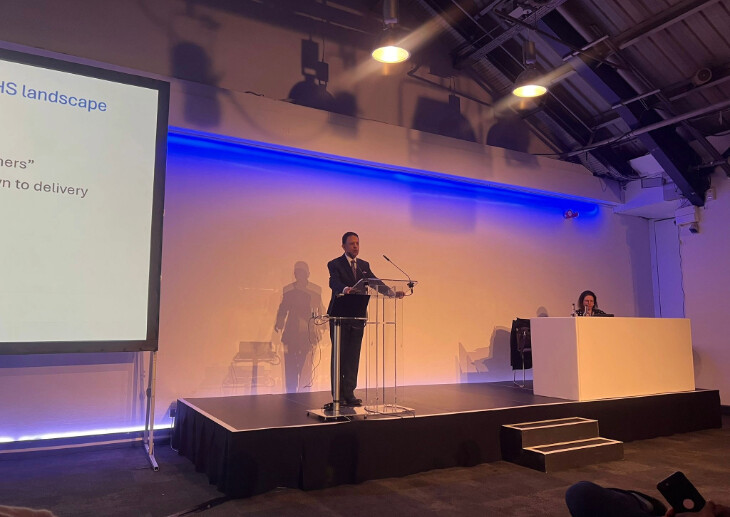
Closing the Pulse PCN and Pulse LIVE London 2026 conference on Wednesday, Dr Nagpaul said that GP workload and GP income is ‘significantly impacted’ by ICBs.
He said: ‘The other thing that I really was struck by when I came back from the BMA, back to my practice, was just how much of what we do is determined locally.
‘Because I spent most of my professional life, you know, trying to negotiate changes at a national level.
‘And in fact, in my own ICB, there’s £80 million funding for two million patients as part of a suite of enhanced services.
‘You know, that’s £40 per patient, for a 10,000 practice, that’s £400,000 per 10K list size, and therefore GP workload, GP income, is significantly impacted by your ICB.’
Dr Nagpaul added: ‘So whilst we’re talking about the national contract, don’t forget, there’s a huge resource, in some cases huge, some cases not so large, but resource that your ICB is spending, and it’s vitally important that you have the right negotiations, you have the right representation, to make sure that that money and that resource is spent wisely and appropriately and adequately for the work that we do as GP practices.’
The 2026/27 GP Contract involved an uplift of £485 million, the repurposing of primary care network (PCN) capacity and access payment (CAP) funding to help recruit additional GPs, and a new requirement for same-day access for urgent cases.
And the 2026/27 DES contract, published last month, said that PCNs will need to work with their ICB to better align their patient lists with neighbourhood boundaries.
Dr Nagpaul also said it vital for GPs and PCNs to ensure that government promises in the 10-Year Health Plan and recent neighbourhood framework to shift funding from the acute sector to community and primary care were met.
‘Now, if that is to happen, that would be bucking the trend of the past few decades, because what we’ve seen is the opposite, and yet you have these very explicit words that I’ve not seen quite so explicitly expressed in previous iterations of government reforms,’ he added.
‘This is the time where we need to stake our claim as a profession.
‘We need to stake our claim at a local level, at a national level, and really throw these words back at each meeting we attend, with every interaction we have with our ICB or whoever you’re interacting with, to make sure that they do comply and adhere to what is a very clear, unequivocal expectation from the centre.’
Dr Nagpaul told delegates that PCNs and general practice need to take up their ‘rightful place’ at the head of integrated neighbourhood teams (INT) and that PCNs and local medical committees (LMC) were allies in the fight for general practice to be at the ‘helm’ of the neighbourhood landscape.
The government’s recent neighbourhood health framework set out that ICBs will be expected to develop INTs focused on preventing patient deterioration and avoiding unnecessary hospital use.
The shift also involves opening 250 neighbourhood health centres across the country through a mix of private and public finance, the first 27 locations of which were revealed last month.