A new treatment hailed as ‘one of the most significant advances in decades for people with bladder cancer’ was approved for NHS use last week.
Around 1,250 patients a year in England could now be offered the combination therapy, which has been shown to dramatically improve survival and remission rates.
Clinical trials found that patients with advanced bladder cancer lived up to twice as long when treated with enfortumab vedotin and pembrolizumab compared with standard chemotherapy.
For the 886 patients who participated in the trial, average survival increased from about 1.5 years with chemotherapy to more than 2.5 years with the new therapy.
The treatment also kept the cancer at bay for longer, extending remission from just over six months to around 18 months.
Almost 30% of patients had no detectable cancer following treatment, compared with 12.5% in the chemotherapy group. Patients also experienced fewer harmful side effects because of the drugs’ targeted approach.
Its availability follows commercial agreements between NHS England and manufacturers Astellas Pharma and MSD UK, enabling the National Institute for Health and Care Excellence (NICE) to recommend it as cost-effective.
The combination treatment works by using a two-pronged attack. Enfortumab vedotin targets cancer cells and kills them, while pembrolizumab – an immunotherapy drug – helps the immune system recognise and fight the remaining cancer cells.
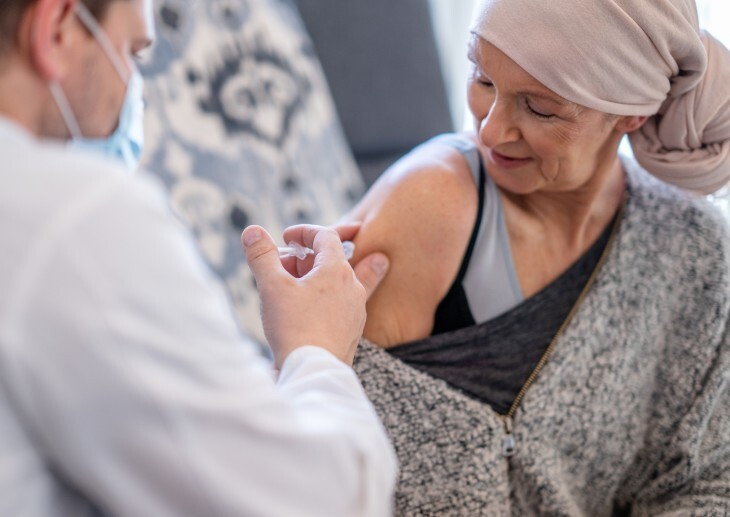
The treatment is delivered by IV infusion to patients whose bladder cancer has spread or cannot be surgically removed.
More than 10,000 people are diagnosed with bladder cancer each year in the UK, and it can be challenging to treat. In its early stages, bladder cancer can be asymptomatic and, once it spreads beyond the bladder, it can be aggressive and resistant to chemotherapy, with an average life expectancy of just over a year.
Professor Peter Johnson, NHS England’s national clinical director for cancer, said: ‘This is one of the most hopeful advances in decades for people with bladder cancer who will now be offered a treatment that can almost double their chances of survival, helping thousands to live longer and giving them more precious moments with their loved ones.’
The rollout is the latest in a series of NHS innovations in cancer care, following the adoption of belantamab mafodotin for blood cancer, the fast-tracking of pembrolizumab for advanced womb cancer, and the launch of mRNA vaccine trials for head and neck cancers.