In our fourth article in a series on winter preparation, Kathy Oxtoby talks to Somerset ICB on how they are building resilience over winter
Each year, NHS organisations in Somerset come together to develop winter plans in order to build capacity and resilience into the system.
These plans include where increases in activity are likely, as well as looking at the previous winter for learning, according to Emma Dunford, associate director of Urgent and Emergency Care Commissioning at NHS Somerset.
‘We review the previous winter for learning, which we incorporate into our plans, and work collectively with our system partners to develop and monitor the impact of the plan,’ she says.
‘We use this information to work with system partners to identify additional schemes to help build our resilience to help our patients stay well over winter and support those who need clinical care and support.’
A key feature of the ICB’s winter plan is helping local people understand what services are available within their community and how they can access them, helping to reduce pressures on ambulance services and A&E.
These services include community pharmacy (including Pharmacy First), Urgent Treatment Centres for minor injuries and illnesses, and Urgent Community Response, which offers same day care at home for those who have a crisis in their health or a fall at home.
NHS Somerset commissions a falls project to support those who do not need to go into hospital but need support within the community, and a same day emergency care service at Musgrove Park and Yeovil District Hospitals.
The ICB also has a care co-ordination hub bringing together community-based, urgent care services into a central hub including district nurses, GPs, SWAST (the ambulance service), Hospital at Home and Urgent Community Response.
There is also a Somerset ambulance doctor car where GPs work alongside frontline crews to provide primary care and urgent support for the ambulance. There is also a separate mental health rapid response vehicle operated by SWAST and Somerset Foundation Trust to support mental health calls, alongside mental health practitioners in the SWAST hubs.
Preparing for winter vaccinations
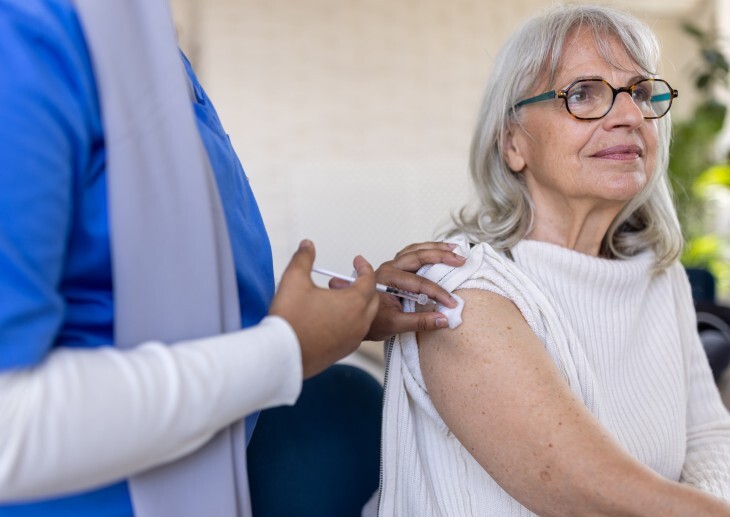
Alongside helping patients understand what services are available, the ICB also has a focus on prevention through vaccination.
This winter’s vaccination planning is focused on ‘prevention and resilience’, says Mike Kelly, NHS Somerset, programme lead neighbourhoods and vaccinations.
‘Vaccination is central to reducing pressures on urgent and emergency care by preventing avoidable admissions, supporting workforce resilience, and protecting our most vulnerable patients. Alongside flu and Covid, we are also rolling out RSV vaccinations and strengthening our childhood vaccination offer.
‘We are working with NHS trusts, primary care, community pharmacies, local authorities, and community partners to ensure timely access, clear messaging, and outreach to our underserved groups,’ he says.
The ICB’s vaccination strategy for 2025/26 is designed around three principles: accessibility, equity, and integration.
‘This means ensuring bookable and walk-in clinics across all sites, co-administration of flu, Covid and RSV where possible, and embedding vaccination into care pathways such as discharge planning, frailty reviews and maternity services,’ says Mr Kelly.
‘We are also piloting new delivery models, including health visitor-led childhood flu vaccinations, and expanding outreach in communities with historically lower uptake.’
Regarding uptake of the flu vaccine, Somerset met the WHO target of 75% in over-65s last year, but uptake was lower in under-65s at risk, young children, and pregnant women. ‘Our aim this year is to increase uptake across those groups by at least 5 percentage points,’ he adds.
With the Covid vaccine, In Spring/Summer 2025, Somerset achieved a 55.1% uptake – well above the national average of 44.4% – and the highest care home uptake in the region (77.3%). For Autumn/Winter 2025, the aim is to stop the decline in uptake seen nationally and achieve at least a 5-percentage point increase in eligible cohorts compared to last year.
RSV vaccine uptake in older adults was strong in 2024/25, and this year’s target for NHS Somerset is 70% coverage in the 75–79 catch-up cohort by 31 August 2025, and 60% coverage in routine older adults by March 2026.
To boost uptake, NHS Somerset is focusing on making vaccinations as ‘convenient and accessible as possible’ for eligible groups, says Mr Kelly.
This includes co-administered flu, Covid and RSV vaccines where clinically appropriate, roving vaccination teams to reach care homes and rural communities, and improved access through bookable, walk-in and weekend clinics.
‘We are embedding vaccination into routine care – for example through discharge planning, frailty reviews and maternity services – to reduce missed opportunities.’
Targeted local campaigns, positive early messaging and translated materials are helping raise awareness and reduce confusion about eligibility. ‘Real-time dashboards will allow us to identify areas of low uptake quickly and take corrective action. The overall aim is to stop the general decline in vaccination uptake and strengthen protection across all at-risk groups this winter,’ says Mr Kelly.
‘Tackling inequalities is at the heart of our vaccination strategy,’ he says.
Last year, Somerset delivered nearly 44,000 additional vaccinations in underserved communities through outreach and targeted campaigns.
‘This year, we are building on that with focused engagement in some of our ethnic communities, supported by local gatekeepers and community partners,’ says Mr Kelly.
‘Our school aged immunisation team is working with schools in areas of historically low uptake, providing revisits, catch-up clinics and translated consent materials. Health visitor pilots will help improve uptake among 2–3-year-olds, particularly in families less likely to attend traditional clinics, he adds.
‘These actions will ensure that no community is left behind in accessing vital protection this winter.’