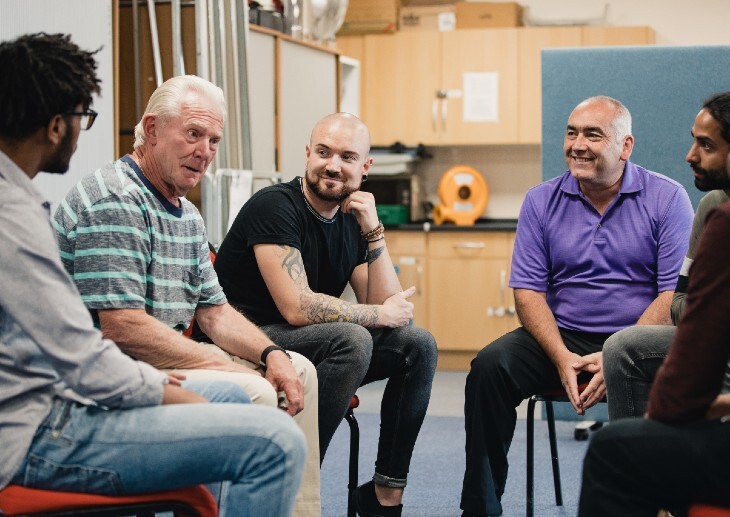
As part of our focus on men’s health Kathy Oxtoby takes a look at efforts being made in North East and North Cumbria
The health and wellbeing of the North East and North Cumbria (NENC) population remains ‘stubbornly worse than the England average’, says Dr Robin Hudson, medical director at North East and North Cumbria ICB. Health life expectancy of men is 56.9 years (in England the average 61.5) and for women 57.5 years (in England the average is 61.9). This equates to approximately 4.5 years of healthy life lost for every person in the North East and North Cumbria, says Dr Hudson.
Given that one third of the NENC population – approximately one million people – live in the lowest two socioeconomic deciles (the CORE20), ‘we can see that a significant part of our communities spends a disproportionate time in ill health, before a premature death’, he says.
‘Drivers for years of ill health are multifactorial – for example, people with conditions of the musculoskeletal system (MSK) have over three times the odds of reporting poor health than those without.’
Modifiable risk factors (smoking, alcohol, obesity, physical activity) and socioeconomic risk factors (education and household income) are also associated with self-reported poor health, and likely to have meaningful and complex relationships with each other and physical health status, he says.
The highest contributors to years of lost life (mortality) are known to be deaths from cancer and cardiovascular disease, with tobacco use the risk factor making the largest contribution to years of life lost for both sexes, followed by high body mass index (BMI), high cholesterol and high blood pressure, says Dr Hudson.
Disparities in men’s health are ‘not just down to biology – there are also complex biopsychosocial reasons for this’, he says.
‘If we look just at men and compare the causes of death contributing to the life expectancy gap between the most and least deprived men, we find that external causes are the main factor – that is deaths due to injury, poisoning and suicide,’ he says.
Approaching these issues ‘has to be through a population health lens’, he says. ‘However, we undoubtedly need to address issues related to how men engage with health promotion as well as how they access NHS services.’
NENC’s Integrated Care Partnership (ICP) strategy, “Better Health and Wellbeing for All”, has projects contributing to the attainment of four goals:
1. Longer and healthier lives: Reduce the gap between the region and the England average in life expectancy and healthy life expectancy at birth, by at least 10% by 2030.
2. Fairer outcomes for all: Reduce the inequality in life expectancy and healthy life expectancy at birth between people living in the most deprived 20% of neighbourhoods and the least deprived 20% by at least 10% by 2030.
3. Better health and care services: To ensure not just high-quality services, but the same quality, no matter where you live and who you are.
4. Giving children and young people the best start in life: Increase the percentage of children with good school readiness at reception, especially for children from disadvantaged groups.
In 2022-23, the ICB established its system wide Healthier and Fairer transformation programme. ‘The programme is aimed at strengthening leadership and accountability in leading the prevention agenda and in addressing health and care inequalities,’ says Dr Hudson. It has brought together senior ICB leads, (executive and non-executive medical directors) together with NENC directors of public health, senior leaders from the Office for Health Improvement and Disparities (OHID), Foundation Trust public health consultants, and the Voluntary and Community Sector (VCS).
The programme is made up of a number of strategies and initiatives.
These include the clinical conditions strategic plan (2025-30) for adults and children. For adults this is focussing upon lung cancer, cardiovascular health, respiratory health, lower back pain and anxiety/depression. The regional healthy hearts check project, for example, recently reached a milestone of 1,500 heart checks. The ICB’s blood pressure kiosk project is coming to a close, and it is developing the final evaluation for the project.
The ICB suicide prevention strategy includes education, prevention, alternatives to crisis, and trauma-informed support.
The ICB’s programme includes workstreams for prevention (smoking, alcohol, healthy weight), the Best Start in Life strategy, and measures to address healthcare inequalities including the Deep End GP practice network, digital inclusion, social prescribing, Core20PLUS5, inclusion health, and poverty proofing.
The ICB is also delivering the WorkWell programme ‘We are one of three areas to receive Health and Growth Accelerator funding from the Government, to help people who feel that they are unable to work due to ill health get the support they need to get back into work,’ says Dr Hudson.
The national Men’s Health Strategy is ‘very welcome and helpfully lays out an approach to address issues facing men today’, he says. ‘While many of these areas can and are being addressed, many of the other issues touched on are much broader than healthcare and cover those wider social determinants at play. Across NENC we will be developing a framework similar to that of the national strategy to create our own men’s health strategy.
‘How men feel connected into their families, their communities and their jobs are equally as important to the lifestyle choices they make which impact health. Improving their health will be about using language that men understand and that they can relate to.’
He says neighbourhood health teams will be ‘central to addressing and delivering these strategies moving forwards with the support of the ICB as it moves towards becoming a strategic commissioner’.